
Interior Decisions
Bathroom Paint Sheen and Prep: What Actually Matters
Bathrooms punish weak prep because moisture, cleaning, and reflected light expose every shortcut.
Bathrooms punish weak prep because moisture, cleaning, and reflected light expose every shortcut.
Quick answer: Bathrooms punish weak prep because moisture, cleaning, and reflected light expose every shortcut.
Look for peeling near the shower, failed caulk, stains at the ceiling, and soft or swollen areas around fixtures. Paint should not be used to hide a leak or a wet substrate. Addressing those clues first is what protects the new finish.
A washable mid- to higher-sheen wall coating may be appropriate in some bathrooms, while ceilings and low-contact areas may call for a different finish. More sheen can make a wall easier to wipe but can also highlight repairs and uneven texture.
Test the color in both daylight and artificial light. Small bathrooms can intensify a color, and warm bulbs can shift a neutral more than expected.
Clean interior finish in a small residential room
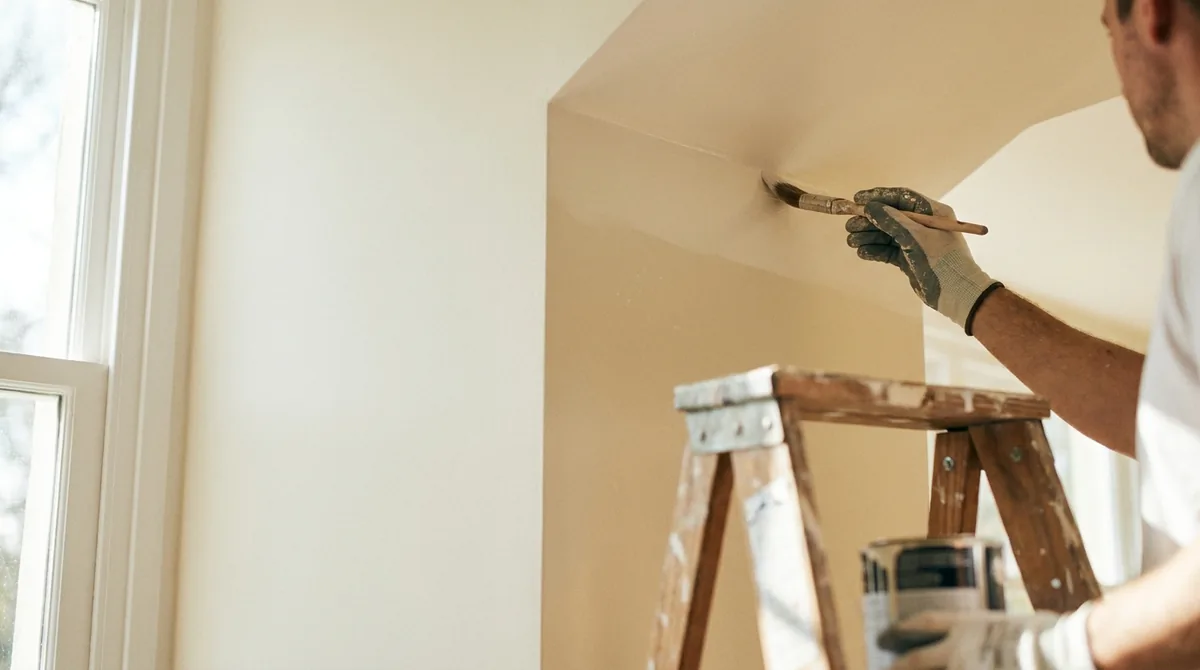
Careful cut-in work around bathroom trim
Start with the surface, the way the space is used, and the result you want to maintain. A useful painting decision names the constraint instead of hiding it behind a broad promise.
Most surprises come from hidden prep: old coatings, failed caulk, unstable drywall, adhesive residue, moisture, difficult access, or a schedule that leaves no cure time. Ask about those items before choosing by price alone.
Good paint cannot replace ventilation or solve an active moisture problem. It should be part of a broader moisture plan.
Not necessarily. The finish should suit the ceiling condition, light, and product guidance.
No. The cause and surface need to be addressed safely before painting.
Tell us what needs attention. We will walk through the prep, timing, and finish with you before anything is scheduled.
No cost, no obligation. You will receive a written quote for the work discussed.