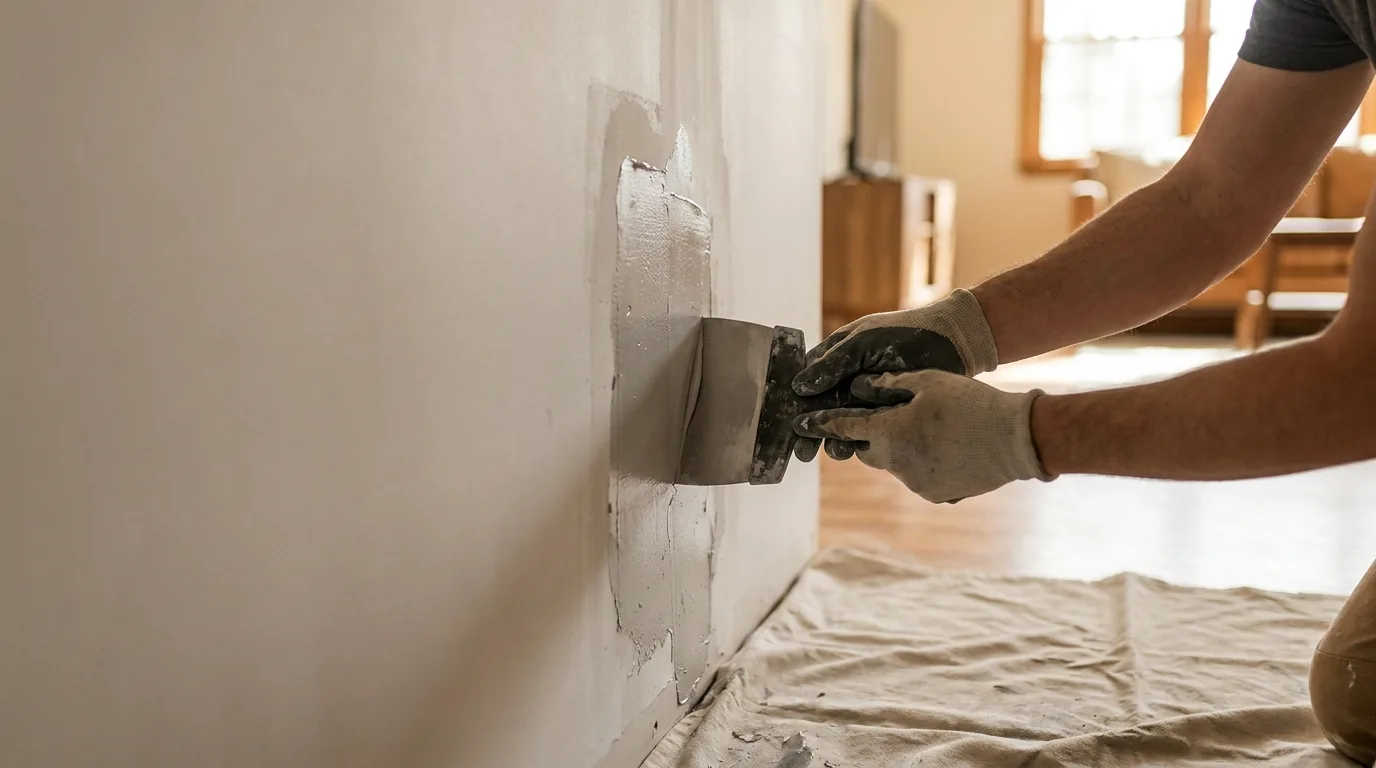
Drywall Repair
Ceiling Repair After a Water Leak in Indiana
A stain is evidence of a past event, not proof that the ceiling is ready to paint.
A stain is evidence of a past event, not proof that the ceiling is ready to paint.
Quick answer: A stain is evidence of a past event, not proof that the ceiling is ready to paint.
First confirm the plumbing, roof, HVAC, or exterior source has been repaired and the area has had time to dry. Soft, swollen, sagging, or delaminated material may need removal rather than a cosmetic patch.
Once the substrate is stable, the repair can include stain blocking, patching, texture blending, and ceiling paint. The primer choice matters because ordinary ceiling paint may not prevent a persistent stain from telegraphing through.
If the stain returns after a proper repair, stop adding paint and investigate the source. Repainting a wet ceiling turns a maintenance problem into a larger finish failure.
Ceiling area prepared after water damage

Repaired and repainted ceiling after leak damage
Start with the surface, the way the space is used, and the result you want to maintain. A useful painting decision names the constraint instead of hiding it behind a broad promise.
Most surprises come from hidden prep: old coatings, failed caulk, unstable drywall, adhesive residue, moisture, difficult access, or a schedule that leaves no cure time. Ask about those items before choosing by price alone.
Only after the source is fixed and the ceiling is dry and stable. A suitable stain-blocking primer may be needed.
Wet or damaged drywall may need removal or replacement. Surface paint cannot restore compromised material.
The source may still be active, the material may not have dried, or the coating system may not have blocked the stain.
Tell us what needs attention. We will walk through the prep, timing, and finish with you before anything is scheduled.
No cost, no obligation. You will receive a written quote for the work discussed.