Interior Decisions
How to Test Paint Colors in a Real North Indy Room
A color sample is useful only when it is large enough, placed correctly, and watched through the room's changing light.
A color sample is useful only when it is large enough, placed correctly, and watched through the room's changing light.
Quick answer: A color sample is useful only when it is large enough, placed correctly, and watched through the room's changing light.
Use a large sample on more than one wall, including the wall that receives the least and most direct light. Keep the sample near trim, flooring, and a fixed furnishing so you can see the undertone in context rather than against a white card.
Leave the sample in place through morning, afternoon, and evening. North-facing rooms may cool a color, warm bulbs can pull neutrals toward yellow, and a glossy neighboring surface can reflect color into the sample.
Do not judge a sample only while it is wet or only from six inches away. Walk through the room normally, view it from the doorway, and compare it with the finish and prep condition you will actually use.
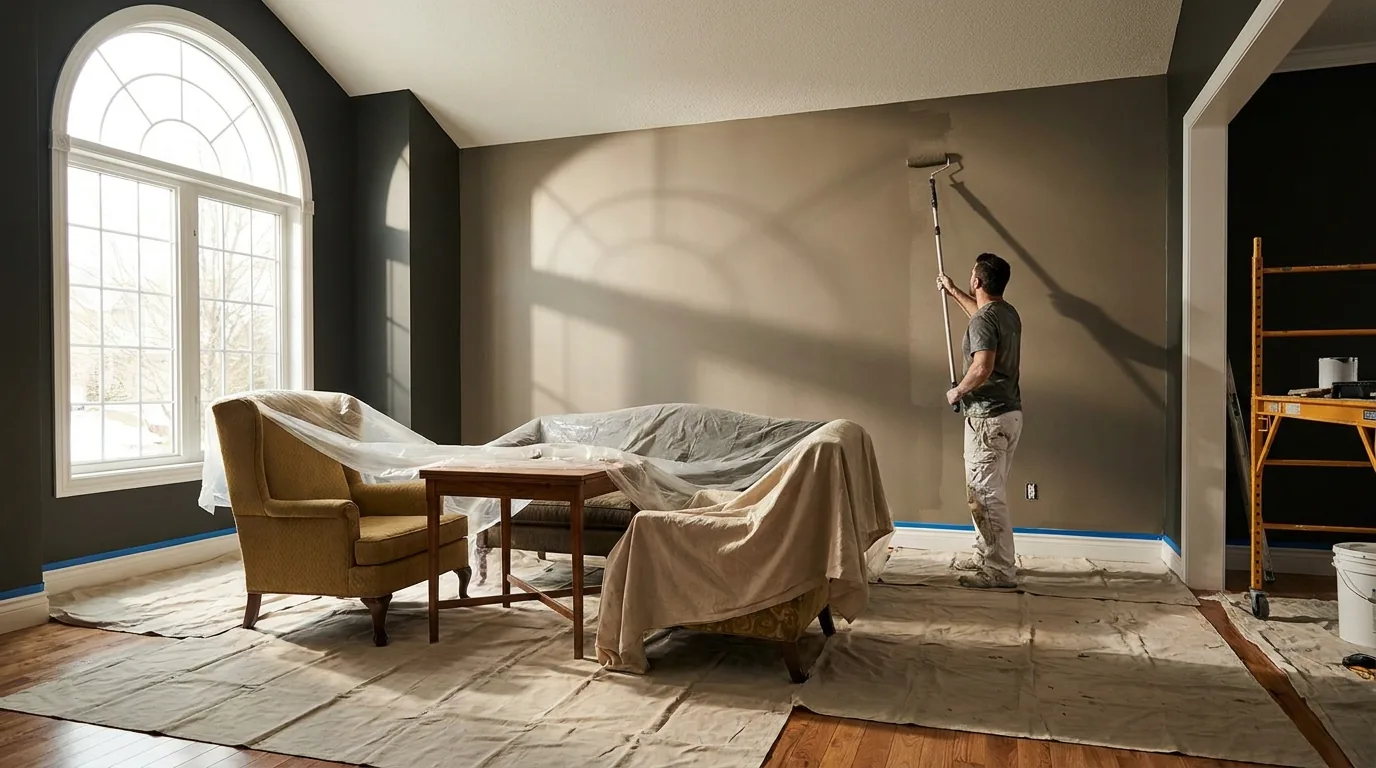
Large paint color sample tested on an interior wall

Bedroom palette viewed in changing natural light
Start with the surface, the way the space is used, and the result you want to maintain. A useful painting decision names the constraint instead of hiding it behind a broad promise.
Most surprises come from hidden prep: old coatings, failed caulk, unstable drywall, adhesive residue, moisture, difficult access, or a schedule that leaves no cure time. Ask about those items before choosing by price alone.
Large enough to read in context on more than one wall. Small cards often hide how the color relates to trim, floors, and light.
Poster board can help compare colors, but a sample on the actual wall also reveals how the existing surface and neighboring finishes affect the result.
Yes. Color and sheen interact, so test the finish you are actually considering whenever possible.
Tell us what needs attention. We will walk through the prep, timing, and finish with you before anything is scheduled.
No cost, no obligation. You will receive a written quote for the work discussed.