Specialty
Popcorn ceiling removal in an older Fishers home typically costs $2.50 to $4.50 per square foot, including scraping, skim-coating, priming, and paint — a 1,400 sq ft main floor generally lands between $2,800 and $5,500 depending on how many coats of texture are underneath and whether repairs are needed after removal.
For most homes built before the early 1990s, the honest first question isn't cost — it's what's in the texture. Popcorn ceiling applied before 1980 can contain asbestos, and that changes the process entirely before anything else gets discussed.
Homes built before 1980, and some built into the mid-80s, may have popcorn texture that contains asbestos fibers used at the time as a fire retardant and texturing agent. Disturbing it by dry-scraping without testing first is the actual health risk — intact, undisturbed popcorn ceiling is not dangerous, but sanding or scraping it releases fibers into the air.
For a home in this age range, a simple lab test (a small sample sent to a certified lab, typically a few days' turnaround) tells you definitively whether special abatement procedures are needed or whether standard wet-scrape removal is fine. We won't scrape a ceiling in an older home without this step confirmed first — it's not a step to shortcut to save time.
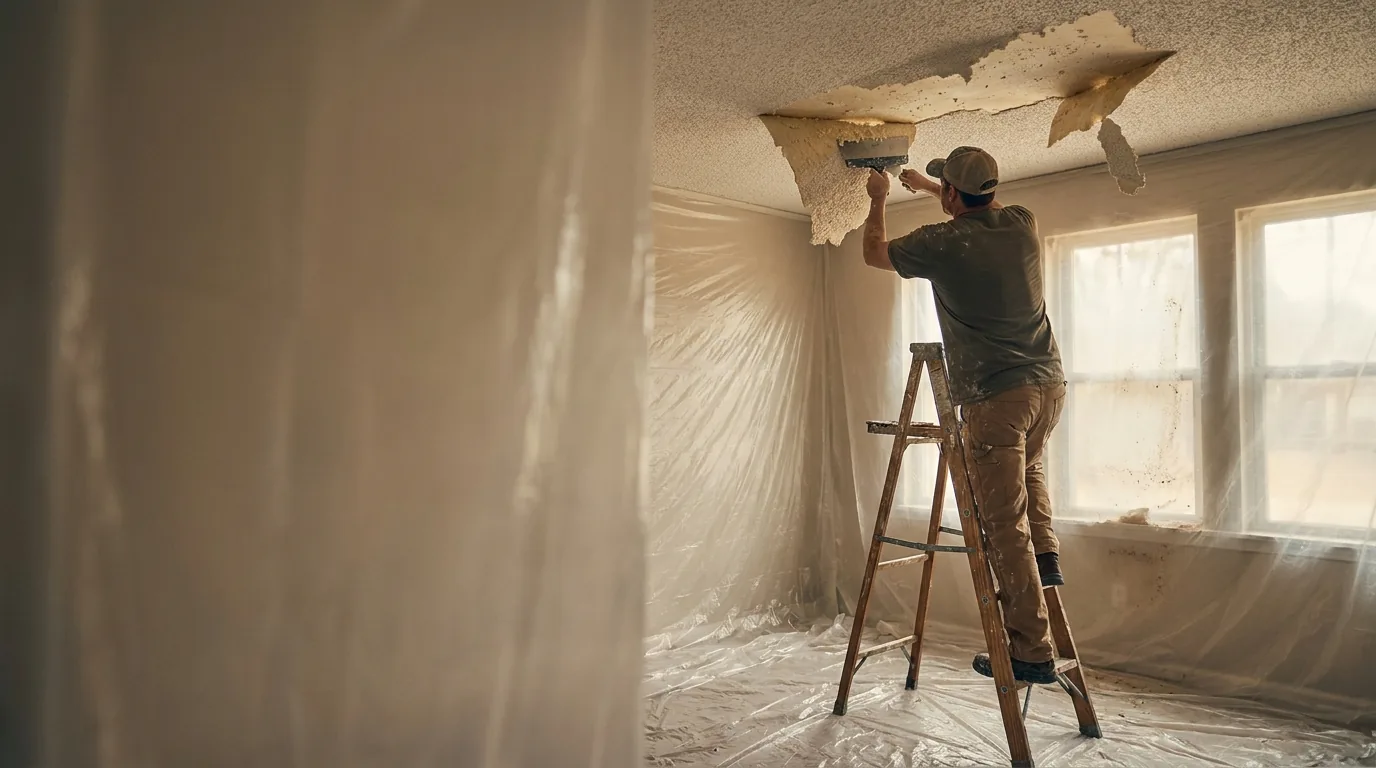
Once cleared, the standard process is: wet the texture (this softens it and critically keeps dust down), scrape it off down to the drywall, then assess what's underneath. This is the part homeowners are often surprised by — ceilings that have had popcorn texture for 30+ years frequently have seam cracking, old water stains, or uneven drywall that the texture was originally hiding.
After scraping, the ceiling gets skim-coated with joint compound to create a smooth, paintable surface, sanded, primed (ceiling-specific primer, since standard wall primer doesn't always bond or hide the same way), and painted — typically flat white or ceiling white, though color ceilings have become more common in higher-end renovations.
For resale value in the current Fishers and North Indy market, smooth ceilings read as a meaningful upgrade — popcorn texture is one of the more dated features buyers notice immediately, right alongside brass fixtures and heavy wallpaper. If you're planning to sell within the next few years, it's one of the higher-return cosmetic updates available.
If you're not selling and the ceiling is in good condition with no cracking or staining, it's a preference call rather than a necessity — smooth ceilings are easier to clean, reflect light more evenly, and read as more modern, but there's no functional problem with leaving well-maintained texture in place.
A standard bedroom or living room (around 200-300 sq ft of ceiling) typically takes a full day including scraping, skim coat, and primer, with paint the following day once the mud is fully dry.
Yes, this is possible and cheaper in the short term, but it doesn't solve the dated look and can make future removal harder since paint bonds the texture more firmly to the substrate.
No, but expect the room(s) being worked on to be unusable for 2-3 days and dusty despite containment measures — we use plastic sheeting and negative air setups to keep dust contained to the work area.
Not always, but it's common enough that we build minor drywall repair into most quotes as an expected likelihood rather than a surprise add-on — homes with visible ceiling stains beforehand are the most likely to need more extensive patching.
We'll walk your home, talk through testing if your home's age calls for it, and give you a straight number — no pressure either way.
A nail hole is a patch. A crack that keeps coming back, sagging texture, or a soft spot near a window is a repair — and painting over the wrong one just hides the problem temporarily.
Read MoreReal price ranges for Carmel interior repaints, broken down by room and square footage — plus the five factors that actually move your number up or down.
Read MoreMay through early October is the real window for exterior painting in Central Indiana — but the calendar matters less than temperature, humidity, and dew point on the actual application day.
Read MoreTell us about your project — no cost, no obligation. We'll follow up with a written quote.