Exterior Preparation
Why Pressure Washing Comes Before Exterior Painting
Paint adheres to a prepared surface, not to pollen, chalk, dust, and last season's grime.
Paint adheres to a prepared surface, not to pollen, chalk, dust, and last season's grime.
Quick answer: Paint adheres to a prepared surface, not to pollen, chalk, dust, and last season's grime.
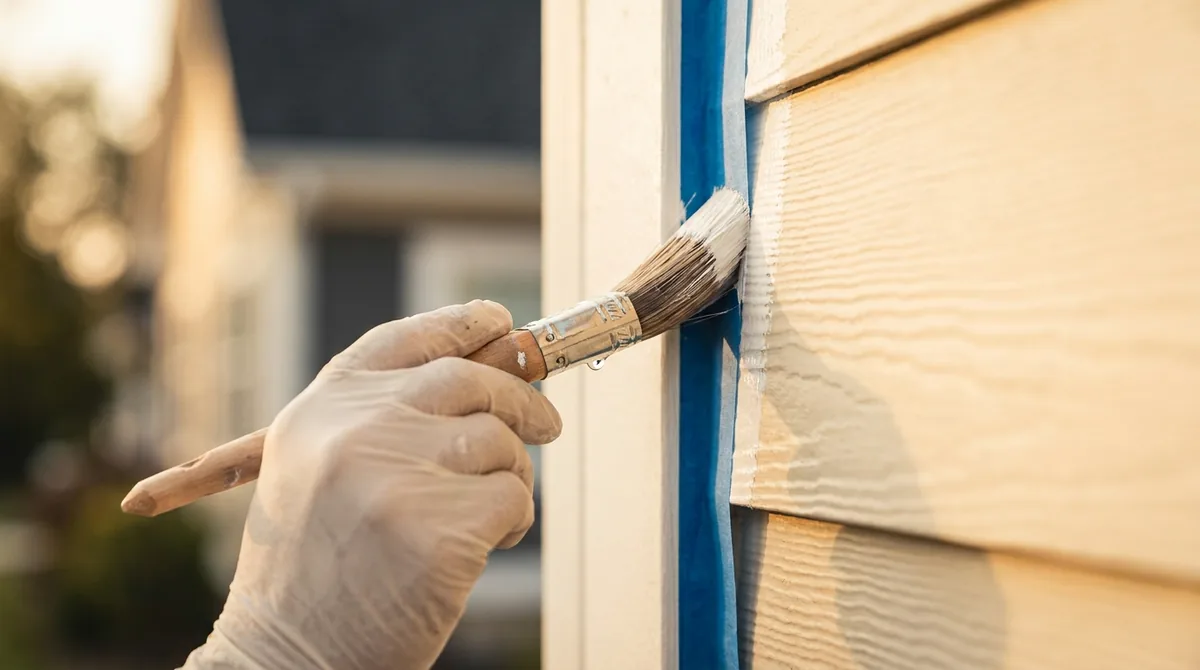
Pollen, dirt, mildew staining, chalking, and loose residue can interfere with adhesion. Cleaning also helps reveal failed caulk, bare areas, peeling edges, and repairs that would otherwise disappear until the first coat is already on.
More pressure is not automatically better. Wood, old paint, joints, and vulnerable trim can be damaged by aggressive washing. The cleaning method should match the substrate and leave enough time for the surface to dry before scraping, priming, and painting.
A quote should tell you whether washing is included, what happens after washing, and how the crew decides the surface is ready. The finish coat is only as dependable as the inspection after the wash.
Exterior surface being cleaned before prep

Clean, painted exterior after complete preparation
Start with the surface, the way the space is used, and the result you want to maintain. A useful painting decision names the constraint instead of hiding it behind a broad promise.
Most surprises come from hidden prep: old coatings, failed caulk, unstable drywall, adhesive residue, moisture, difficult access, or a schedule that leaves no cure time. Ask about those items before choosing by price alone.
Sometimes the weather and surface allow it, but the substrate needs to be dry enough for the coating system and any repair work.
It can remove loose material, but scraping, sanding, and edge preparation are still often required.
No. Interior surfaces need a different cleaning and protection approach.
Tell us what needs attention. We will walk through the prep, timing, and finish with you before anything is scheduled.
No cost, no obligation. You will receive a written quote for the work discussed.