Wallpaper Removal
What Affects Wallpaper Removal Cost in Indiana?
Wallpaper removal cost is driven less by the roll count than by what is bonded to the wall underneath.
Wallpaper removal cost is driven less by the roll count than by what is bonded to the wall underneath.
Quick answer: Wallpaper removal cost is driven less by the roll count than by what is bonded to the wall underneath.
A removable top layer may come down cleanly while the backing or adhesive remains. Older paper, painted-over paper, and wallpaper installed over imperfect drywall can add scraping, softening, skim work, sanding, and primer.
The finish goal matters just as much. "Remove the paper" is a smaller scope than "remove the paper, make the wall paint-ready, and apply a new finish." Both are valid, but they should not be priced or scheduled as the same job.
Ask for the estimate to separate removal, wall repair, priming, and painting. That makes it easier to choose a stopping point if the revealed wall needs more work than expected.
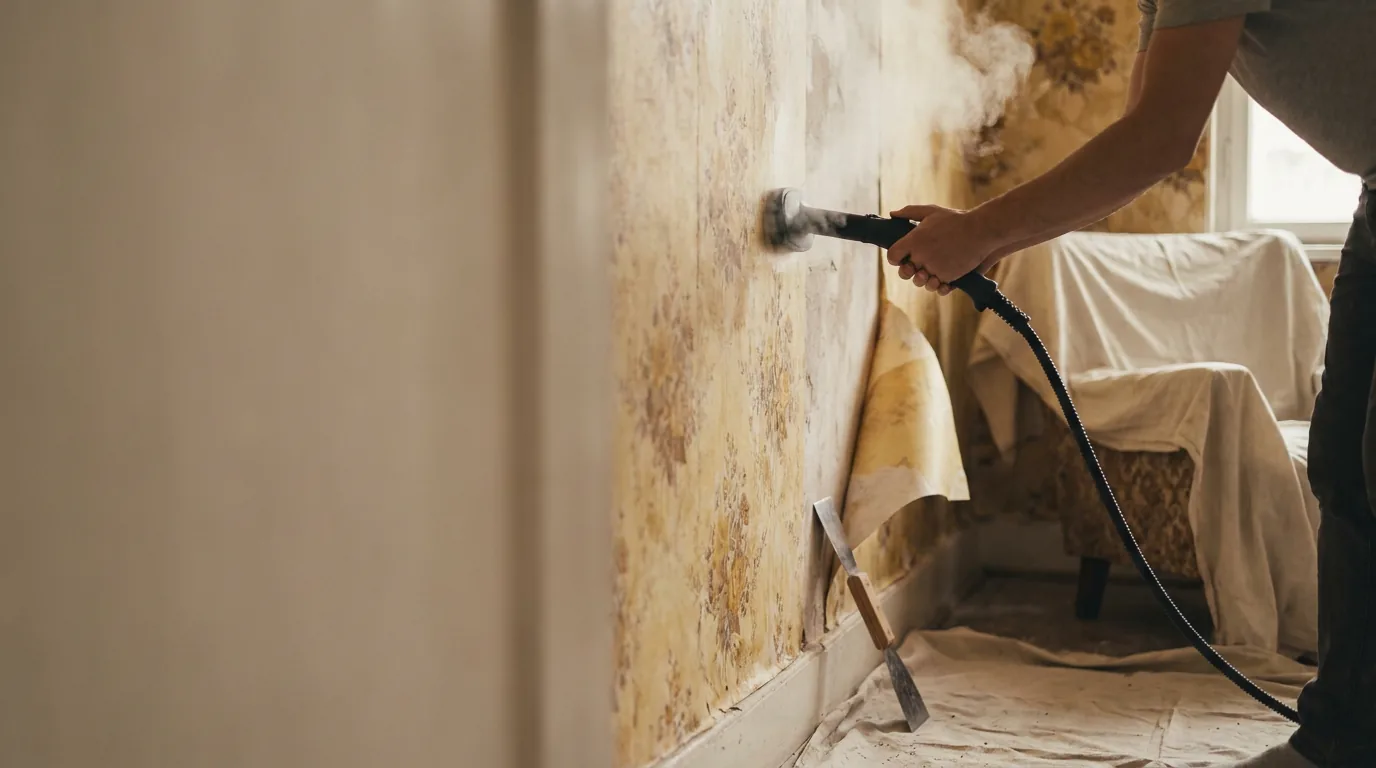
Wallpaper removal in progress on an interior wall
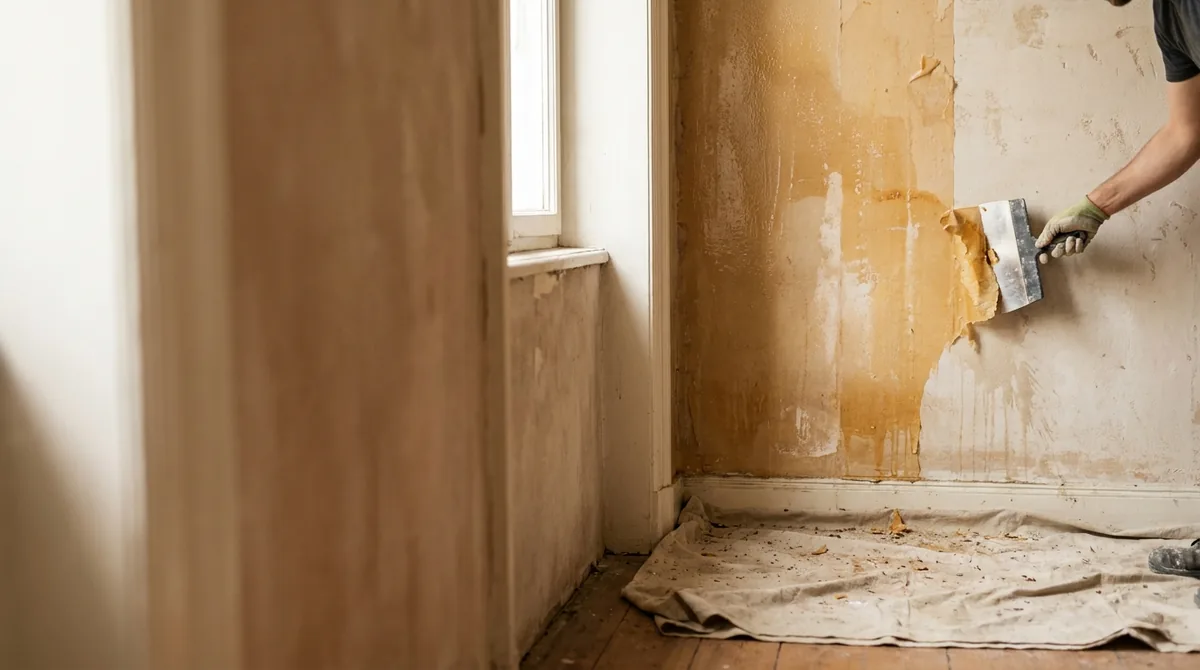
Adhesive residue revealed after paper removal
Start with the surface, the way the space is used, and the result you want to maintain. A useful painting decision names the constraint instead of hiding it behind a broad promise.
Most surprises come from hidden prep: old coatings, failed caulk, unstable drywall, adhesive residue, moisture, difficult access, or a schedule that leaves no cure time. Ask about those items before choosing by price alone.
Photos can help with an initial discussion, but layers, adhesive, and wall condition are easier to price after inspection.
It can be, but removal and paint-ready wall preparation should be identified separately in the scope.
Multiple layers, painted surfaces, brittle paper, and damaged substrate often require more controlled removal and repair.
Tell us what needs attention. We will walk through the prep, timing, and finish with you before anything is scheduled.
No cost, no obligation. You will receive a written quote for the work discussed.