
Exterior Planning
Paint Color Planning for Carmel HOA Homes
A Carmel exterior color plan has to look good at the curb and make sense on the actual home, not just in a digital palette.
A Carmel exterior color plan has to look good at the curb and make sense on the actual home, not just in a digital palette.
Quick answer: A Carmel exterior color plan has to look good at the curb and make sense on the actual home, not just in a digital palette.
Start with the surfaces that can change: body, trim, shutters, door, and accents. Then check the association's approved colors, sample requirements, and review timeline. A precise list is easier to approve than a general description.
Samples should be viewed in direct sun, shade, and the entry approach. The same neutral can look warmer against brick and cooler against gray siding. Trim contrast also changes how large or formal the house appears.
The practical next step is a scope that aligns the approved palette with the prep needed. If the exterior is already chalking or peeling, the color conversation should include the maintenance work that makes the change last.
North Indy home with coordinated exterior colors
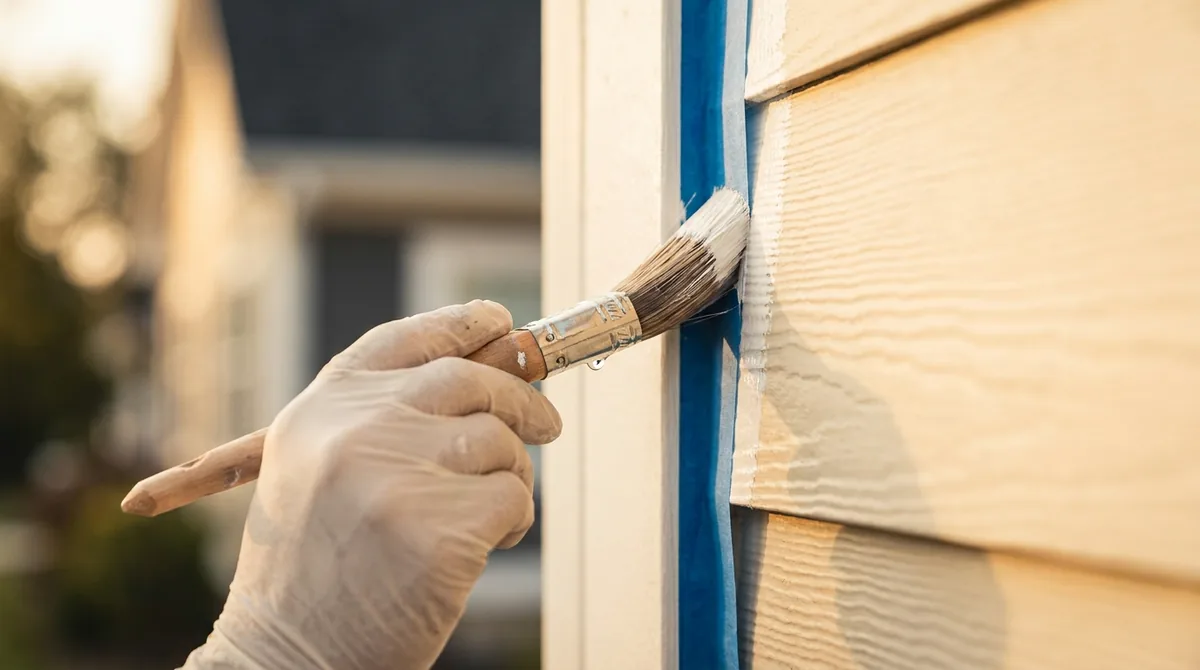
Exterior trim and siding color transition
Start with the surface, the way the space is used, and the result you want to maintain. A useful painting decision names the constraint instead of hiding it behind a broad promise.
Most surprises come from hidden prep: old coatings, failed caulk, unstable drywall, adhesive residue, moisture, difficult access, or a schedule that leaves no cure time. Ask about those items before choosing by price alone.
Approval should be documented before the project begins so the scope and schedule are based on the accepted plan.
There is no universal number. Body, trim, door, and accents should relate to the architecture and rules.
Use renderings as a starting point, then test physical samples on the actual home.
Tell us what needs attention. We will walk through the prep, timing, and finish with you before anything is scheduled.
No cost, no obligation. You will receive a written quote for the work discussed.