Ceiling Planning
Popcorn Ceiling Testing Before Removal in Indiana
Testing is a planning step that protects the project from a dangerous assumption about an older ceiling.
Testing is a planning step that protects the project from a dangerous assumption about an older ceiling.
Quick answer: Testing is a planning step that protects the project from a dangerous assumption about an older ceiling.
The age of the home is a clue, not a test result. Previous repairs, layers, and renovation history can complicate the picture. A qualified professional should explain what is being tested, how samples are handled, and what the result means for the removal plan.
If a material is suspected or confirmed to contain asbestos, do not treat ordinary scraping advice as a substitute for regulated work. The removal scope, containment, disposal, and contractor qualifications may change.
For homeowners planning a smooth ceiling, testing can also prevent a schedule from being built around an unsafe or incomplete assumption. The best finish plan starts with the ceiling that is actually there.
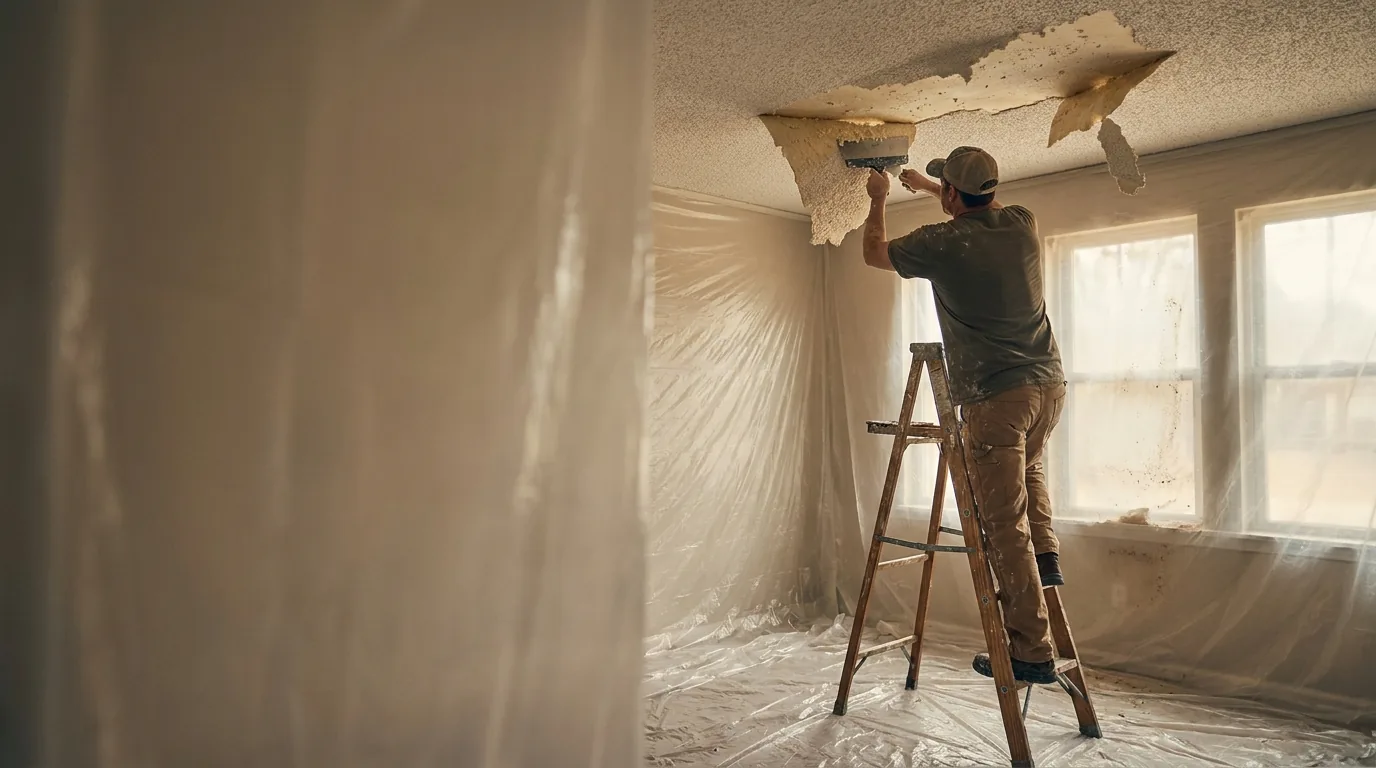
Older ceiling texture being assessed before removal
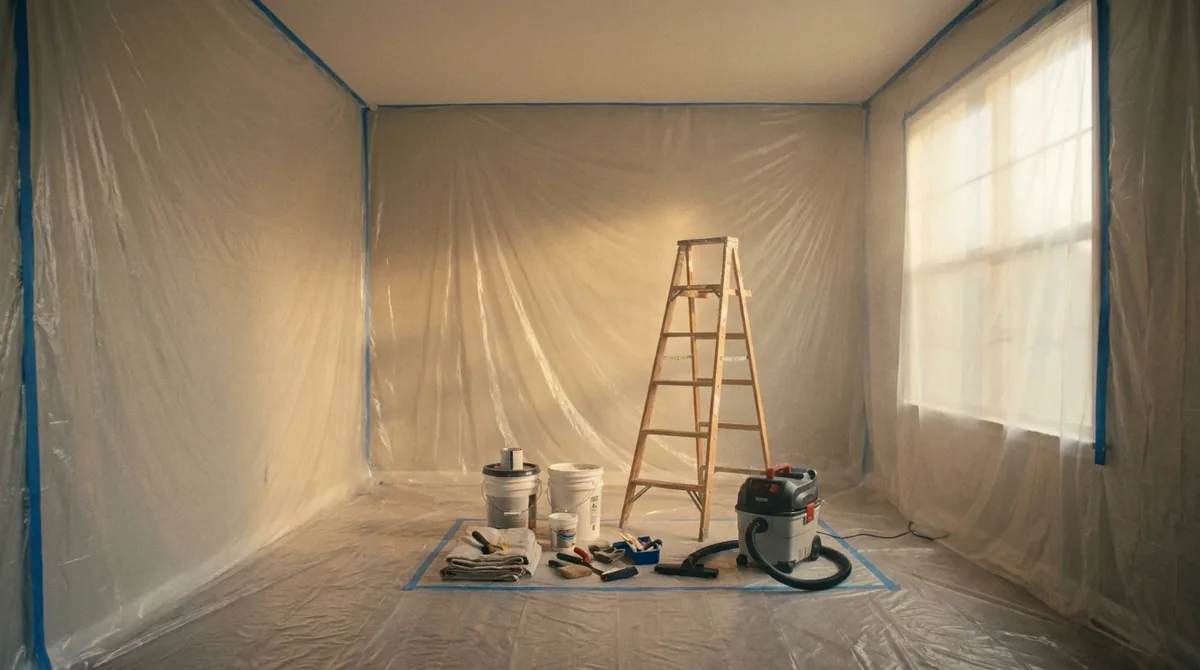
Protected room prepared for ceiling texture work
Start with the surface, the way the space is used, and the result you want to maintain. A useful painting decision names the constraint instead of hiding it behind a broad promise.
Most surprises come from hidden prep: old coatings, failed caulk, unstable drywall, adhesive residue, moisture, difficult access, or a schedule that leaves no cure time. Ask about those items before choosing by price alone.
No. The only reliable way to know is appropriate testing, not appearance or age alone.
Ask who is qualified to collect and interpret the sample and what regulated steps apply if the result is positive.
No. Testing and the resulting work requirements should be understood before disturbance or scheduling.
Tell us what needs attention. We will walk through the prep, timing, and finish with you before anything is scheduled.
No cost, no obligation. You will receive a written quote for the work discussed.