
Interior Painting
Why Dark Color Changes Often Need a Two-Coat Plan
Coverage is not just about how dark the new color is; it is about the contrast underneath and the way the finish dries.
Coverage is not just about how dark the new color is; it is about the contrast underneath and the way the finish dries.
Quick answer: Coverage is not just about how dark the new color is; it is about the contrast underneath and the way the finish dries.
The old color, primer, sheen, and surface repairs all affect the result. A major light-to-dark change may need a different primer or an intentional first coat, while a same-family repaint may need less coverage work. The right plan is based on the wall, not a universal number.
Two coats also give the finish a more consistent film thickness. That matters around cut lines, repaired areas, and places where the roller loads differently from the brush.
Ask what the quote assumes: one coat, two coats, or coverage until uniform. The answer should be tied to the selected color and substrate so there is no disagreement when the first coat looks uneven.
Interior wall receiving a controlled finish coat
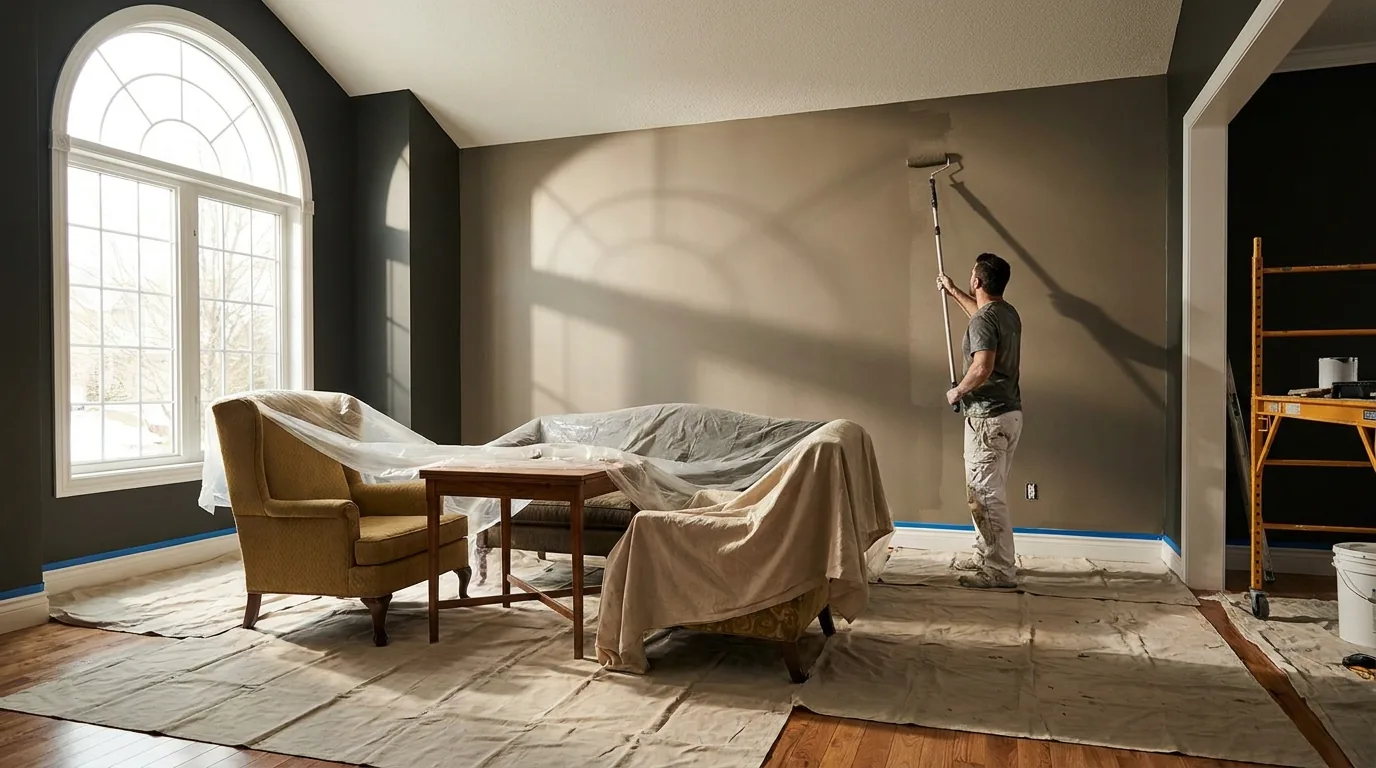
Even dark color coverage in a finished room
Start with the surface, the way the space is used, and the result you want to maintain. A useful painting decision names the constraint instead of hiding it behind a broad promise.
Most surprises come from hidden prep: old coatings, failed caulk, unstable drywall, adhesive residue, moisture, difficult access, or a schedule that leaves no cure time. Ask about those items before choosing by price alone.
No. The existing color, product, primer, and surface determine coverage. A written plan should explain the assumption.
Uneven film thickness, absorption, sheen, surface repairs, and insufficient coverage can all contribute.
Sometimes primer improves the system, but it is not a universal substitute for the finish coats the color requires.
Tell us what needs attention. We will walk through the prep, timing, and finish with you before anything is scheduled.
No cost, no obligation. You will receive a written quote for the work discussed.