Interior
Two full coats is the standard for any wall going through a color change or covering existing paint older than a couple of years — not an upgrade, and not something that should be priced as optional on a quote. A single coat can look acceptable in even lighting immediately after application and still show roller marks, thin spots, and uneven sheen once it's living under real daylight and lamp light.
The exception that actually holds up: a same-color, same-sheen refresh coat on a wall already in good condition can sometimes get away with one coat. Everything else benefits from two.
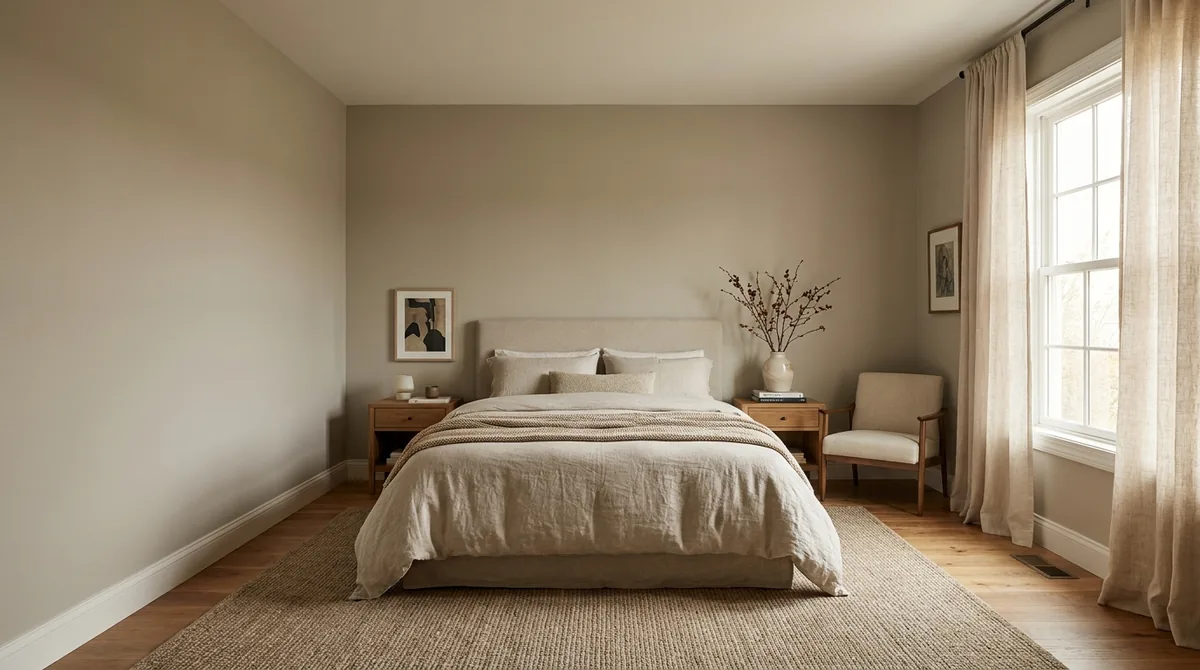
Fresh paint under bright, even lighting — the kind you'd get standing in the middle of a room during the day right after finishing — can hide thinner spots and minor roller lap marks that become obvious later under different lighting conditions. Raking light, the low-angle light that comes through windows in early morning or evening, or from a lamp positioned to the side of a wall, reveals texture and thickness inconsistencies that overhead lighting simply doesn't show.
This is why a one-coat job can genuinely look acceptable to a homeowner walking through right after the painters leave, and still look patchy and unfinished a few weeks later once it's been lived with under normal daily lighting.
Beyond color coverage, sheen consistency is the other reason two coats matters. A single coat over a porous or slightly uneven surface (which describes most existing walls, even ones that look smooth) tends to absorb unevenly, creating subtle sheen variations across the wall — some spots slightly flatter, some slightly glossier — that become visible once light hits the wall at different angles throughout the day. A second coat evens this out because it's going over an already-sealed, uniform first coat rather than the original variable surface.
Deep, highly saturated colors — navy, black, deep red, forest green — often struggle to achieve full, even coverage in two coats over a lighter base color, particularly with standard (non-tinted) primer. In these cases, either a properly tinted primer (gray or a primer tinted toward the new color) or a third topcoat is the standard solution, and a contractor experienced with bold colors should flag this during the estimate rather than surprising you with an added coat mid-project.
Look at the wall from an angle with a lamp or window light hitting it sideways — one-coat work often shows visible roller marks, faint streaking, or slightly different sheen patches that a proper two-coat job won't show.
Not quite double in material cost since the second coat typically goes on more efficiently than the first (less absorption into a now-sealed surface), but it does roughly double the labor time for that surface, which is reflected in the price difference between one-coat and two-coat quotes.
No — primer is a separate product designed to seal and promote adhesion, not to provide final color and sheen. "Two coats" refers to two coats of the actual finish paint, in addition to primer where primer is needed.
Generally no — while two coats of a lower-tier paint will outperform one coat of the same product, premium paints typically have better pigment load and hide, meaning even they benefit from two coats for full color richness and durability, not just coverage.
Ask us for a full written breakdown — coats, prep, and paint quality spelled out clearly, no vague line items.
Real price ranges for Carmel interior repaints, broken down by room and square footage — plus the five factors that actually move your number up or down.
Read MoreMay through early October is the real window for exterior painting in Central Indiana — but the calendar matters less than temperature, humidity, and dew point on the actual application day.
Read MoreSeven to ten years is the honest average for a properly prepped exterior repaint in Central Indiana's freeze-thaw climate — here's what actually shortens or extends that number.
Read MoreTell us about your project — no cost, no obligation. We'll follow up with a written quote.