Exterior
A properly prepped, quality exterior repaint in Central Indiana holds up 7 to 10 years on most siding types before it needs a full repaint again, with some well-maintained homes stretching to 12-15 years on durable substrates like fiber cement. That range assumes real prep work happened — the paint itself is rarely the reason a job fails early.
Indiana's climate is genuinely tougher on exterior paint than milder regions: freeze-thaw cycles that repeat dozens of times each winter, UV exposure that peaks in summer, and humidity swings between seasons all stress the paint film in ways a one-size-fits-all national estimate doesn't account for.
Indiana typically sees dozens of freeze-thaw cycles each winter — temperatures crossing 32°F repeatedly rather than staying reliably below freezing for months like a northern climate, or reliably above it like the South. Each cycle causes microscopic expansion and contraction in the substrate beneath the paint. Over years, this is what causes hairline cracking to eventually become peeling, especially at joints, seams, and anywhere moisture can get behind the paint film.
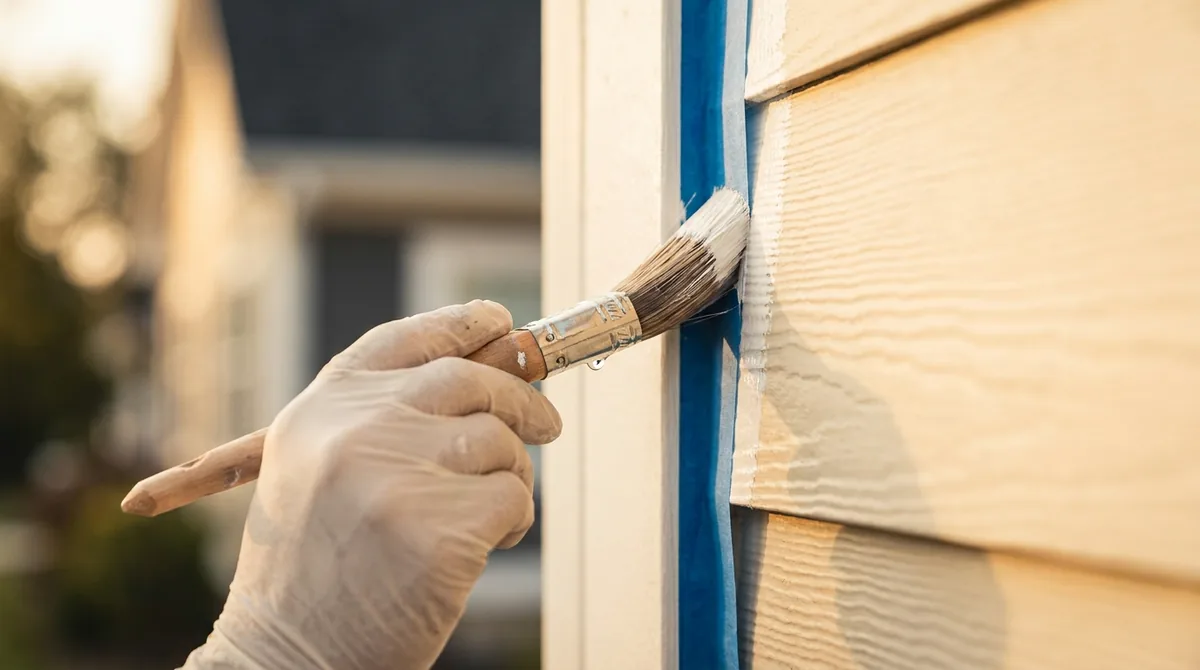
This is exactly why caulking and sealing gaps before painting isn't a cosmetic step — it's the difference between paint that survives a decade of freeze-thaw and paint that starts failing at the seams within 3-4 years because water got behind the film and froze.
Fiber cement (Hardie board and similar) holds paint the longest of common siding types because it doesn't expand and contract with moisture the way wood does, and it doesn't have the thermal movement of vinyl. Homes with fiber cement siding in North Indy commonly get 12-15 years from a quality repaint.
Wood siding looks incredible when properly maintained but is the most climate-sensitive — it absorbs and releases moisture with the seasons, which stresses the paint film more than other substrates. Vinyl siding technically isn't designed to be painted (though it's done regularly), and requires specific paint formulated to flex with vinyl's higher thermal expansion rate or the finish will crack prematurely.
In order of how often we see them: skipped or inadequate caulking at joints and trim; painting over unwashed surfaces (mildew, chalk, or pollen trapped under the film prevents proper adhesion); one coat instead of two; painting in poor weather conditions (see our guide on timing); and skipping primer on bare wood, patched areas, or drastic color changes.
Any one of these can cut a 9-year paint job down to 3-4 years. This is also why two contractors can quote wildly different prices for the "same" exterior repaint — one is pricing a paint job that lasts a decade, the other is pricing one that looks good for the first year.
Yes, somewhat — darker colors absorb more UV and heat, which can accelerate fading and, on some substrates, slightly shorten lifespan compared to lighter colors. Quality UV-resistant formulas minimize this gap significantly.
Chalking (a powdery residue that comes off on your hand when you touch the siding) is usually the earliest visible sign paint is nearing the end of its life, often a year or two before actual peeling starts.
Yes — masonry needs breathable, elastomeric, or mineral-based paints that let moisture escape from the brick rather than trap it, which is a different formulation than standard acrylic siding paint. Using the wrong type on brick can trap moisture and cause spalling.
Manufacturer warranties typically cover the paint product itself, not labor or application quality — which is why proper prep and application by an experienced crew matters more to real-world lifespan than which paint can is used.
We'll take a look, tell you honestly whether it's a repaint year or a couple more seasons, and give you a free written estimate either way.
Chalking, caulk failure at joints, and peeling near the roofline are the three earliest warning signs — waiting past them tends to turn a repaint into a repair-and-repaint.
Read MoreStain and sealer solve overlapping but different problems — most Indiana decks actually need both, just not always at the same time or in the same product.
Read MoreThe honest answer varies by siding material more than by any fixed number of years — here's the real schedule by material type.
Read MoreTell us about your project — no cost, no obligation. We'll follow up with a written quote.