Exterior
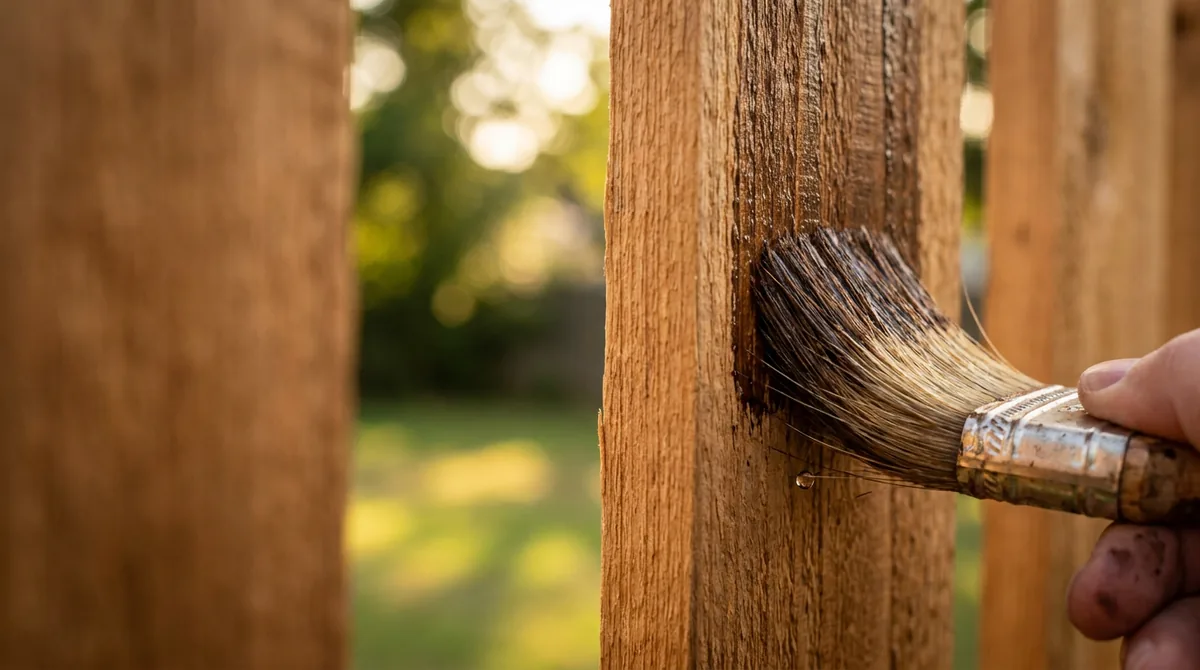
Stain adds color/tone and UV protection while still letting wood grain show through, and most quality stains include some water-repellent properties. Sealer (often clear) is primarily focused on moisture protection without adding color. For most Indiana decks exposed to full sun and winter freeze-thaw, a quality stain with built-in sealing properties covers both needs in one product.
The confusion usually comes from product marketing that uses these terms loosely — some "sealers" include UV-blocking tints, and some "stains" are formulated primarily for water resistance. The real question to ask is what your deck's wood is actually facing: sun fading, moisture and rot, or both.
Stain penetrates the wood surface and contains pigment that provides UV protection while still allowing the wood grain to show through, ranging from nearly transparent to solid/opaque depending on how much pigment it carries. Most quality deck stains also include water-repellent additives, which is why a good semi-transparent stain often does double duty as protection against both sun and moisture.
Sealer, particularly clear sealer, is primarily formulated to repel water and prevent moisture absorption into the wood — critical for preventing rot, warping, and mildew — but without pigment, it typically offers minimal UV protection. A deck sealed with pure clear sealer and no UV protection will still gray and fade from sun exposure even while staying structurally protected from moisture.
Central Indiana decks deal with genuine seasonal extremes: intense summer UV exposure and humidity, followed by winter freeze-thaw cycling that stresses wood fibers as moisture within the wood expands and contracts. A deck that's only protected from UV (heavily pigmented solid stain with poor water resistance) is vulnerable to moisture damage over winter. A deck that's only sealed against moisture but unprotected from UV will gray and fade within a season or two of direct sun exposure.
This is why we typically recommend a semi-transparent or solid stain with built-in water-repellent technology for full-sun Indiana decks, rather than treating stain and sealer as separate sequential steps — most quality modern products handle both in one application.
A deck in full sun most of the day needs real UV protection — semi-transparent or solid stain, not clear sealer alone. A deck that's mostly shaded (under mature trees or a covered porch) faces less UV stress but often faces more moisture retention from reduced sun/airflow drying, making water-repellent sealing properties the priority even if UV protection matters less.
Fence staining follows similar logic but often with different exposure patterns than a deck — one side of a fence frequently gets significantly more sun than the other, which is worth factoring into product choice and reapplication timing.
Typically every 2-3 years for a quality semi-transparent stain on a sun-exposed deck, though heavily shaded decks or solid stains can sometimes stretch to 3-4 years between applications.
It depends on what was used previously — some clear sealers can prevent new stain from properly absorbing into the wood, which is why we test absorption or strip/sand as needed before applying new product over an unknown previous treatment.
Often yes — solid stain has more pigment and can better mask graying, minor discoloration, and inconsistent wood tone on an older deck, while semi-transparent works best on newer or well-maintained wood where you want the grain to remain visible.
No — composite decking doesn't absorb stain or sealer the way real wood does; it's a different material entirely and doesn't require this maintenance cycle, though it has its own cleaning recommendations.
We'll check the wood condition and sun exposure during your free estimate and recommend the right product — not just the one that's easiest to sell.
Seven to ten years is the honest average for a properly prepped exterior repaint in Central Indiana's freeze-thaw climate — here's what actually shortens or extends that number.
Read MoreChalking, caulk failure at joints, and peeling near the roofline are the three earliest warning signs — waiting past them tends to turn a repaint into a repair-and-repaint.
Read MoreThe honest answer varies by siding material more than by any fixed number of years — here's the real schedule by material type.
Read MoreTell us about your project — no cost, no obligation. We'll follow up with a written quote.