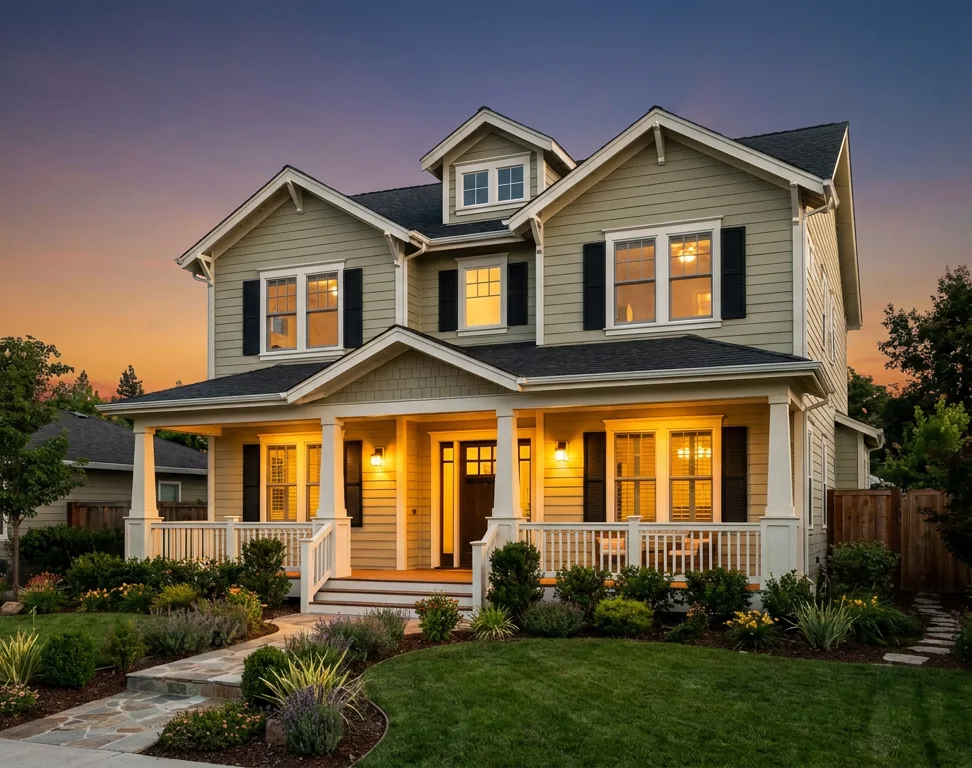
Exterior
As a general Indiana schedule: wood siding every 6-9 years, vinyl siding every 7-10 years if painted, fiber cement every 10-15 years, and brick/masonry every 10-15 years. But condition matters more than the calendar — a home showing chalking or caulk failure at year 6 needs attention regardless of what the "schedule" says.
These ranges assume the previous paint job included proper prep. A rushed or poorly prepped repaint can fail in half that time, which is why the honest answer to "how often" always comes with the caveat: it depends on how well the last one was done.
Siding material is the biggest factor because different materials expand, contract, and absorb moisture at different rates, which stresses the paint film differently over time. Wood moves the most with humidity and temperature, which is part of why it needs repainting most frequently among common siding types, while dense fiber cement barely moves at all and holds paint significantly longer.
Sun exposure is the second major factor — south and west-facing walls typically show wear years before north-facing walls on the same house, which is why a full house sometimes gets partial touch-up work on the sunniest elevations between full repaints rather than needing the whole exterior redone at once.
Rather than relying purely on a calendar, check for the concrete signs: chalking residue when you touch the siding, cracked or missing caulk at joints, any peeling or bubbling (especially near the roofline), and uneven fading between walls. We cover these signs in more detail in our post on warning signs your exterior needs attention — but the short version is that visible symptoms should override a "it's only been X years" assumption in either direction.
A home that's had excellent maintenance, quality paint, and favorable sun exposure can genuinely go longer than the general schedule suggests. One with poor original prep or heavy sun exposure on vulnerable walls might need attention sooner.
Generally yes. Paint that's allowed to fail completely — full peeling exposing bare substrate to UV and moisture — often means the next job includes more extensive scraping, sanding, priming, and sometimes wood repair, compared to repainting proactively while the existing coat is simply aging rather than fully failed. Staying roughly on schedule, adjusted for your home's actual condition, tends to be the more cost-effective long-term approach.
Generally yes to some degree — lighter colors absorb less UV and heat, which can modestly extend paint life compared to very dark colors on the same siding, though quality UV-resistant formulas narrow this gap.
It's possible for touch-up maintenance between full cycles, but color matching aged paint on one elevation to unfaded paint on others can be visually noticeable — full-exterior repaints tend to look more cohesive.
It can — old, leaking gutters cause concentrated moisture exposure on nearby siding that accelerates paint failure in that specific area, so gutter maintenance is worth addressing alongside or before an exterior repaint.
Not immediately harmful, but the risk increases the longer paint is left past its functional life — once the paint film fully fails, the underlying siding loses UV and moisture protection it was relying on.
We'll take a look, check for the real warning signs, and tell you honestly whether this is your year or you've got time.
Seven to ten years is the honest average for a properly prepped exterior repaint in Central Indiana's freeze-thaw climate — here's what actually shortens or extends that number.
Read MoreChalking, caulk failure at joints, and peeling near the roofline are the three earliest warning signs — waiting past them tends to turn a repaint into a repair-and-repaint.
Read MoreStain and sealer solve overlapping but different problems — most Indiana decks actually need both, just not always at the same time or in the same product.
Read MoreTell us about your project — no cost, no obligation. We'll follow up with a written quote.