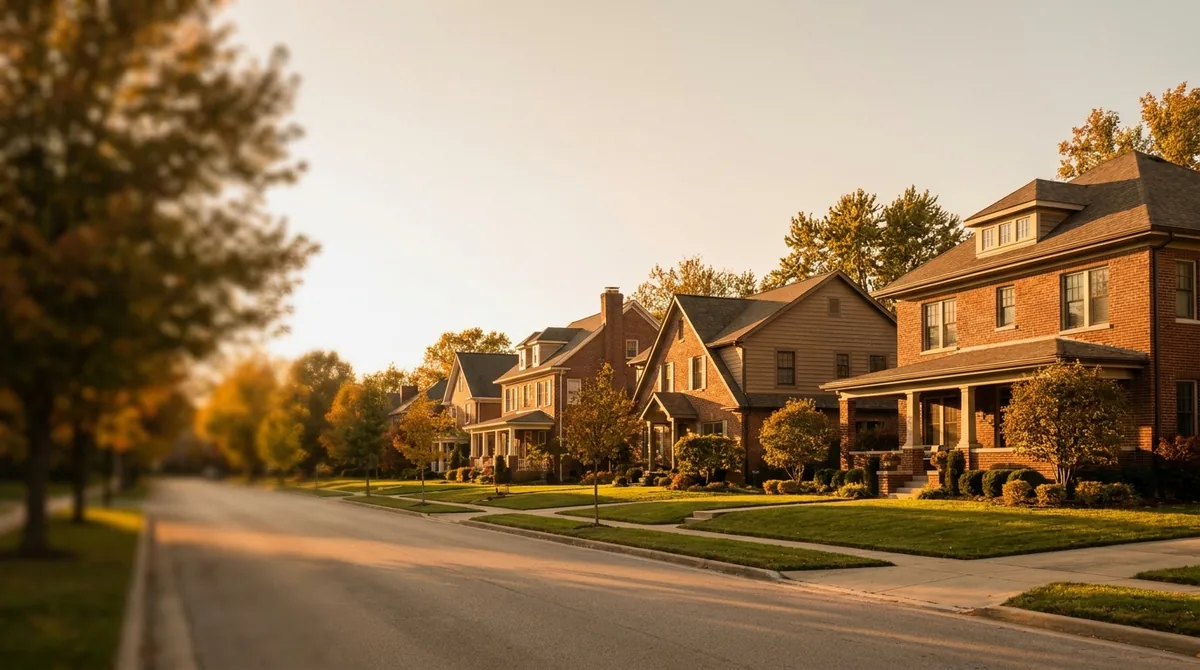
Exterior
The clearest early sign your Westfield home needs an exterior repaint is chalking — a powdery residue that rubs off on your hand when you touch the siding. Left alone, the next stage is usually caulk failure at trim joints and window seams, followed by actual peeling, most often starting near the roofline and on south/west-facing walls that take the most sun.
Catching it at the chalking stage rather than waiting for visible peeling is the difference between a straightforward repaint and a repaint that also requires wood repair or replacement.
Chalking happens as UV exposure slowly breaks down the paint's binder over years, leaving pigment particles that rub off as a fine powder. Run your hand along a lower section of siding — if it comes away with a visible dusty residue, especially on sun-exposed walls, the paint's protective qualities are already declining even if it still looks okay from a distance.
This is the stage where a repaint is straightforward maintenance rather than repair. Homes in Westfield's newer developments (Bridgewater, Chatham Hills, and similar) built in the last 10-15 years are increasingly hitting this stage now, since original builder-grade exterior paint often has a shorter honest lifespan than a premium repaint.
Cracked, shrunk, or missing caulk at window trim, door frames, and siding joints looks minor but is actually one of the more serious signs — it means moisture has a direct path behind the paint film and siding material. Combined with Indiana's freeze-thaw cycling, this is exactly the failure mode that turns a simple repaint into a project that also needs wood repair.
If you can see daylight or feel airflow at a trim joint, or the caulk has visibly pulled away and cracked, that's worth addressing before it's paired with a full repaint rather than waiting for the next scheduled maintenance cycle.
When peeling starts, it's rarely uniform across the whole house — it typically concentrates near the roofline (where moisture runs off and lingers longest), around downspouts, and on the most sun-exposed elevations, usually south and west-facing walls. If you're seeing peeling in these specific spots while the rest of the house looks fine, that's actually useful diagnostic information about where moisture or UV stress is concentrated, not a sign the whole exterior has failed uniformly.
No — soft, spongy wood indicates moisture damage that needs repair or replacement of that section before painting, not paint over top of it. Painting over compromised wood just hides a problem that will resurface.
Fading by itself is mostly cosmetic and doesn't necessarily mean the paint has lost its protective function — but combined with chalking or uneven fading between walls, it's a reasonable signal the paint is aging out.
Not an emergency, but not something to leave for multiple seasons either — exposed substrate under peeling paint is vulnerable to moisture and UV damage that gets more expensive to repair the longer it's exposed.
Many Westfield neighborhoods have HOA color guidelines requiring approval before an exterior repaint — we can help identify what's needed and build that lead time into your project schedule.
We'll do a free walk-around, tell you honestly what stage your exterior is at, and what it would take to fix it right.
Seven to ten years is the honest average for a properly prepped exterior repaint in Central Indiana's freeze-thaw climate — here's what actually shortens or extends that number.
Read MoreStain and sealer solve overlapping but different problems — most Indiana decks actually need both, just not always at the same time or in the same product.
Read MoreThe honest answer varies by siding material more than by any fixed number of years — here's the real schedule by material type.
Read MoreTell us about your project — no cost, no obligation. We'll follow up with a written quote.